
Several members of the Cockcroft Institute (CI) have recently attended the International Particle Accelerator Conference (IPAC’26) in Deauville, France.
For a week each year the accelerator community gathers to discuss the latest developments in accelerator science and technology from around the world.
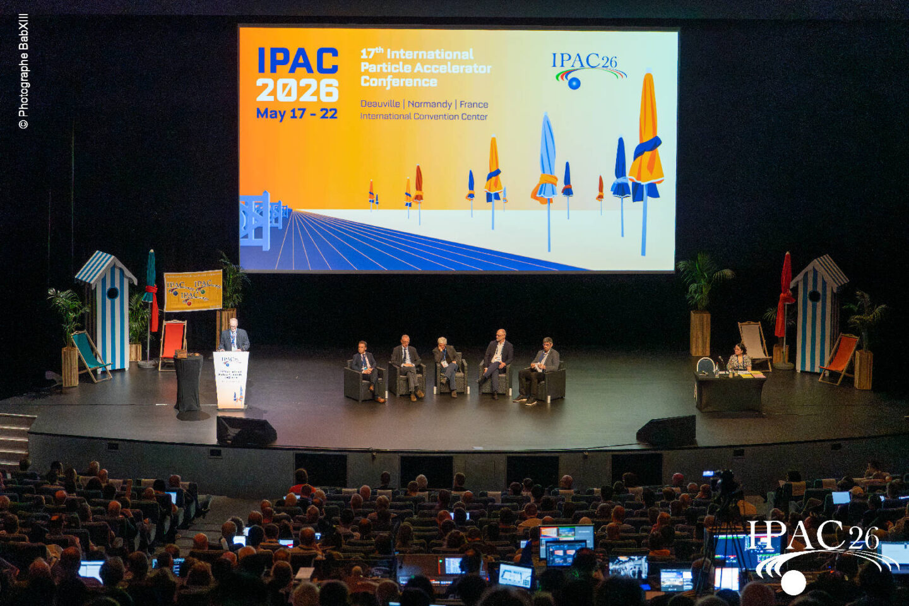
The event was hosted and organised by the GANIL laboratory in collaboration with CEA, CNRS, Synchrotron SOLEIL, ESRF along with the European Physical Society Accelerator Group. Over 1,500 delegates from 41 countries, and more than 120 industry partners gathered to discuss the latest advances in accelerator science through an intense programme of talks and poster sessions together with an industry exhibition.
The Cockcroft Institute was once again well represented, with more than 40 members attending the conference and contributing to the scientific programme with talks, as session chairs and over 40 poster contributions across novel acceleration schemes, plasma acceleration, data science, medical applications and beam dynamics studies.
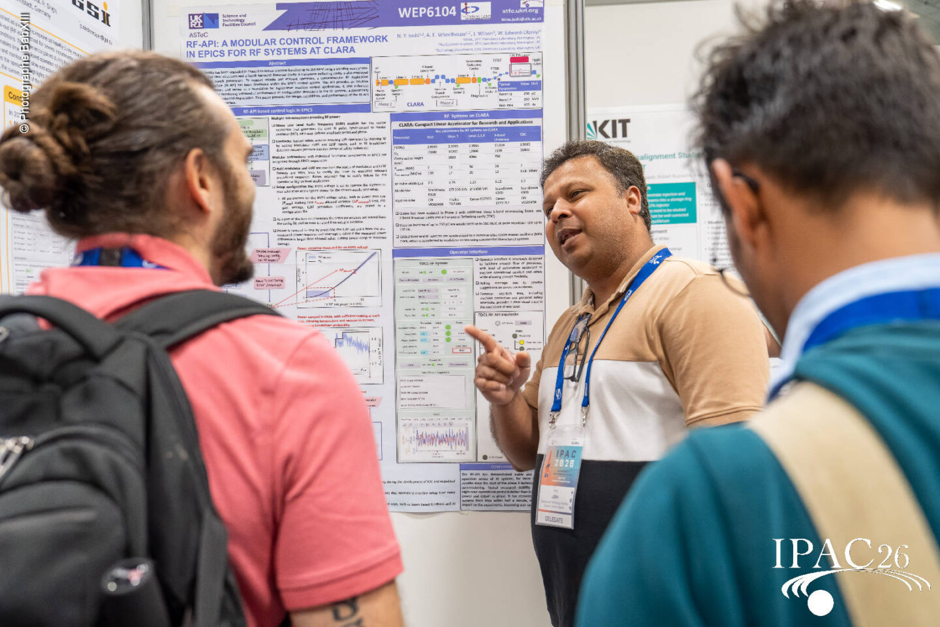
A dedicated exhibition area was set aside during the poster session to showcase invited posters highlighting outstanding contributions, including “Moonlight on the Serengeti: Casting (Digital) Shadows with NALA, SIMBA, PUMBAA and Friends” by Alex Brynes (ASTeC), et al., and “UK XFEL: the UK vision for next-generation XFELs” by Dave Dunning (ASTeC) and the UK-XFEL team.
PhD students Ana Maria Guisao Betancur and Qiyuan Xu from the University of Liverpool, as well as Jiaqi Zhang and Aras Amini from the University of Manchester were awarded scholarships to attend this important conference. They were given a day of lectures on varying accelerator topics before the conference began as well as presenting the latest developments on their research in a student poster session on the Sunday, and as part of the main conference poster sessions.
The scientific programme presented new projects, innovations, first ever achievements, records and more. Over 1,400 submitted papers were edited by the JACoW team during the conference.
Mark Johnson from ASTeC contributed a talk on ‘CLARA Commissioning and First Friendly User Experiments’, summarising the first user run of CLARA and the versatility of experiments it can perform.
Carsten P Welsch from the University of Liverpool contributed a talk about how data-intensive methods, advanced modelling and modern instrumentation can enhance beam measurements under challenging conditions, highlighting research results of LIV.INNO students.
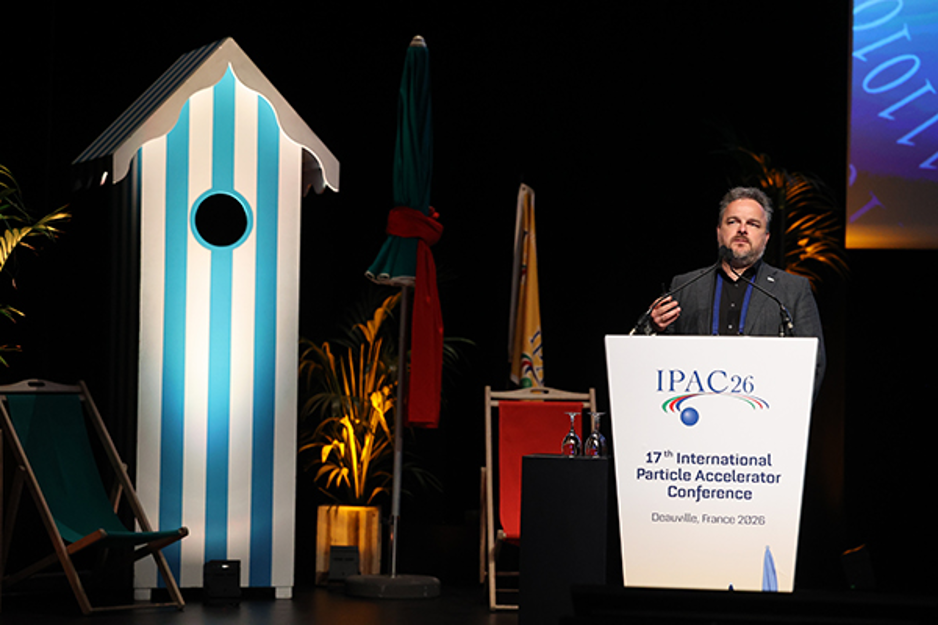
An interesting talk about ‘The Ghost Collider: An Innovative Higgs Factory’ was presented by Rob Apsimon from Lancaster University, showcasing the Ghost Collider, a proposal for a 550 GeV centre-of-mass linear collider with four interaction regions. The primary innovation is the use of ‘ghost bunches’ containing equal numbers of electrons and positrons, therefore being electrically neutral.
Sophie Gresty from the University of Liverpool contributed to the conference with a talk on ‘Machine learning techniques for design of complex accelerator magnets’, discussing how machine learning tools may be used to improve the efficiency of the design process for complex accelerator magnets and presenting results from a recent case study.
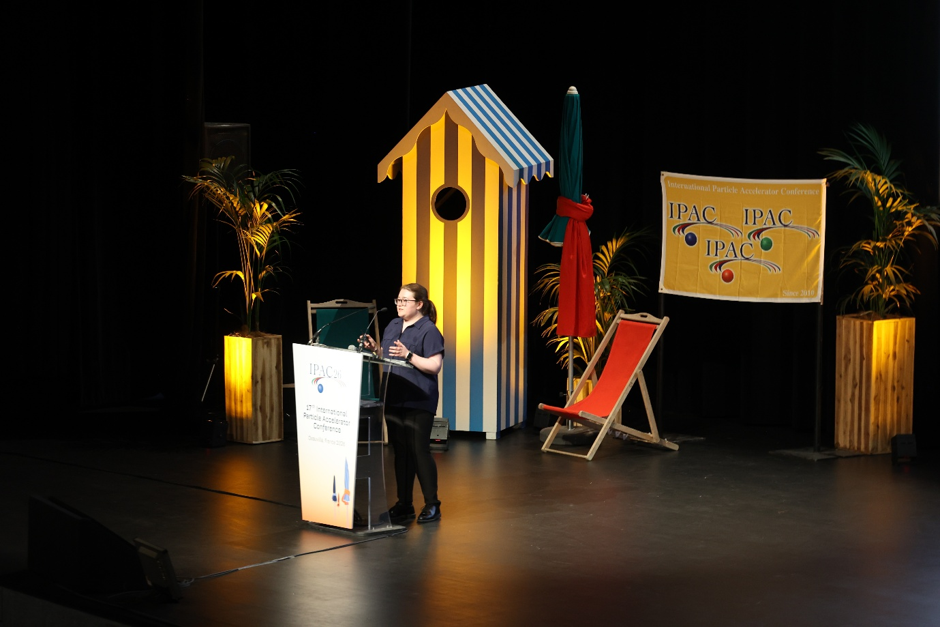
A further presentation was given by Morgan Hibberd from the University of Manchester. In his talk he described ‘Terahertz techniques in the advanced accelerator landscape’, presenting latest experimental results and simulations demonstrating efficient THz-driven chirping and energy modulation of relativistic electron bunches.
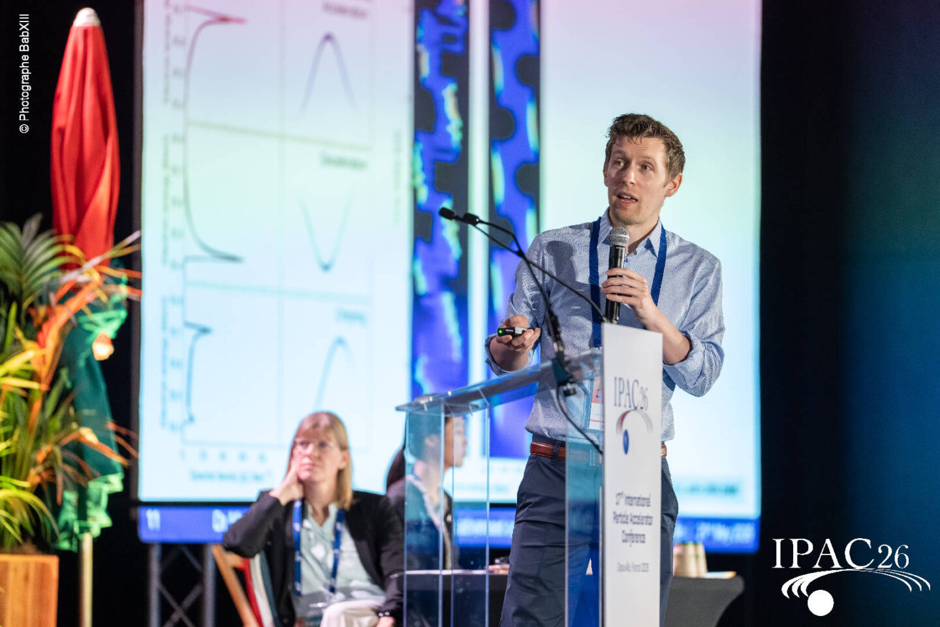
The IUPAP Hackathonino took place during IPAC’26 and served as a proof of concept for an annual event held at IPAC conferences.
Around 65 students formed multidisciplinary teams to address societal challenges using accelerator-based concepts and tools. Over the first three days of IPAC, student teams developed and presented their solutions, with several winning teams receiving awards.
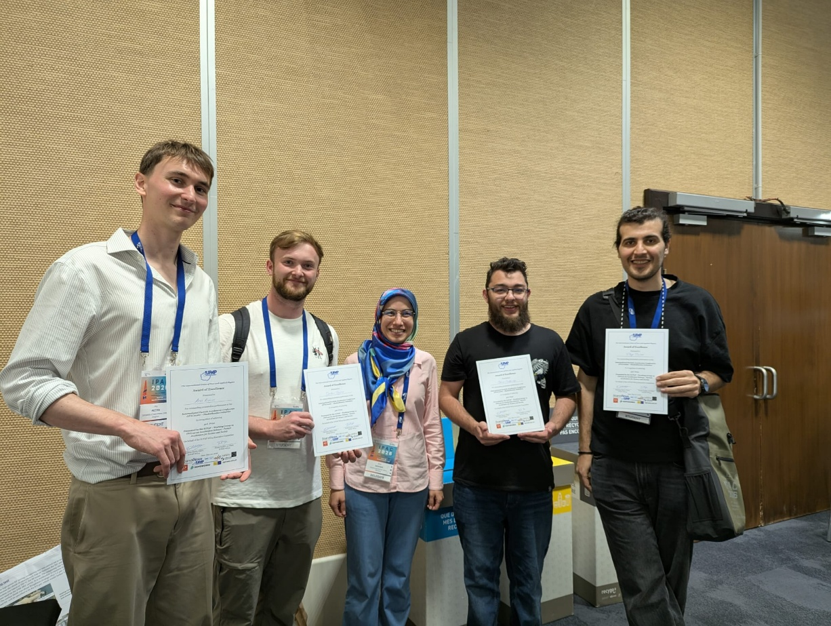
PhD students Aras Amini, Oliver Betteridge, Jordan Byrne and Filip Peczek took part in the coding competition. The team worked on an update plan of a compact accelerator-based neutron source (CANS), simultaneously optimising output neutron beam and the involved costs. They analysed simulation data to assess the CANS performance of various upgrade scenarios and communicated with the industrial representatives to estimate associated costs. The project showcased effective upgrade strategies and won the 3rd prize.
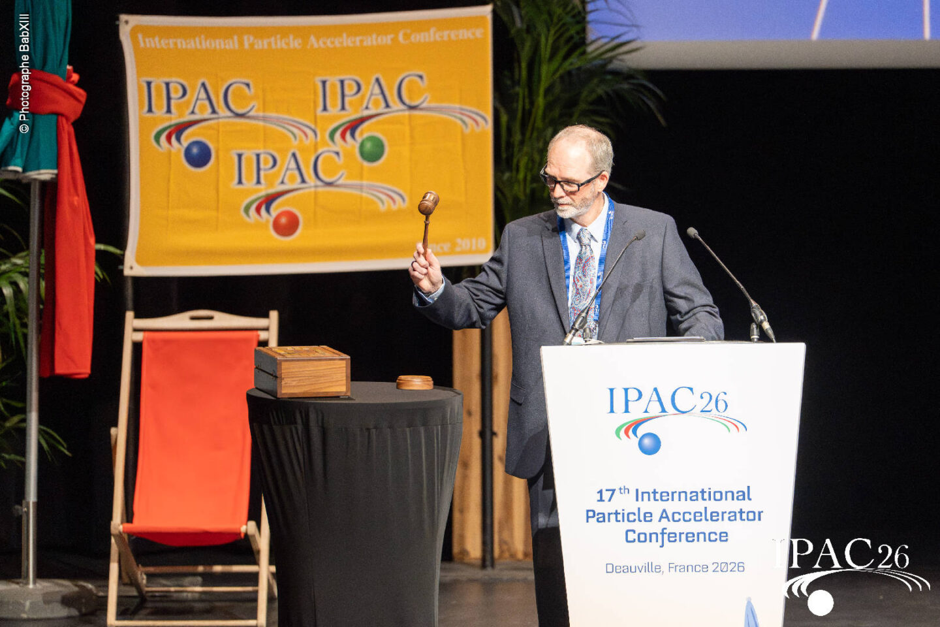
Peter McIntosh (ASTeC) held the prestigious role of Chair of the International Organising Committee (IOC), providing strategic leadership for the planning and delivery of IPAC’26, while Deepa Angal-Kalinin (ASTeC) served on the Scientific Advisory Board.
In addition to scientific contributions, the University of Liverpool’s QUASAR Group had a booth in the industry exhibition at this conference. The group used this to promote its latest research results in plasma and data science, indicating a possible path to making accelerators more sustainable. There was a lot of interest in the stand, the group’s future plans, and a treasure hunt realized in partnerships with other exhibitors.
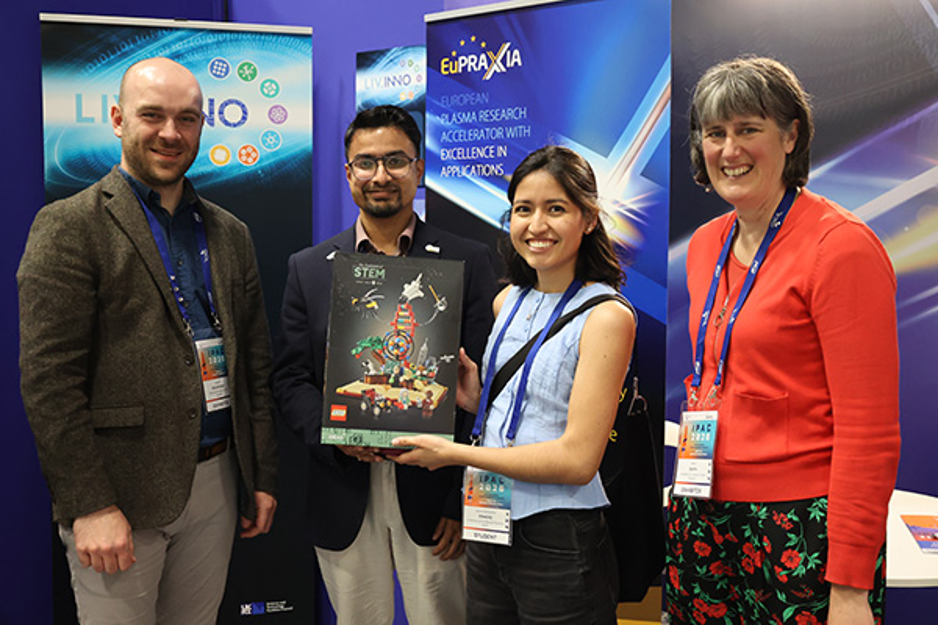
A second stand in the exhibition was used to promote the future IPAC’29. This 20th edition of the IPAC conference series will be held in Liverpool and organised by members of the Cockcroft Institute and the wider UK accelerator community.