
The PACRI (Plasma Accelerator systems for Compact Research Infrastructures) project held its first annual meeting at the Instituto Superior Técnico (IST) in Lisbon, Portugal from 24th to 26th March.
With more than €10 million funding from the European Union and the Swiss State Secretariat for Education, Research and Innovation, PACRI aims to revolutionize plasma accelerator technologies for next-generation research infrastructures such as EuPRAXIA and ELI-Beamlines. The consortium consists of 19 academic and 6 industrial partners. By achieving breakthroughs in high-repetition-rate plasma modules, advanced diagnostics control, high-efficient RF linear accelerator technologies, and high-power laser systems as some of the main focuses of the project, PACRI aims to reduce the size, cost, and environmental impact of novel accelerators, enabling their use in diverse applications such as medical imaging, materials diagnostics, and even compact colliders.
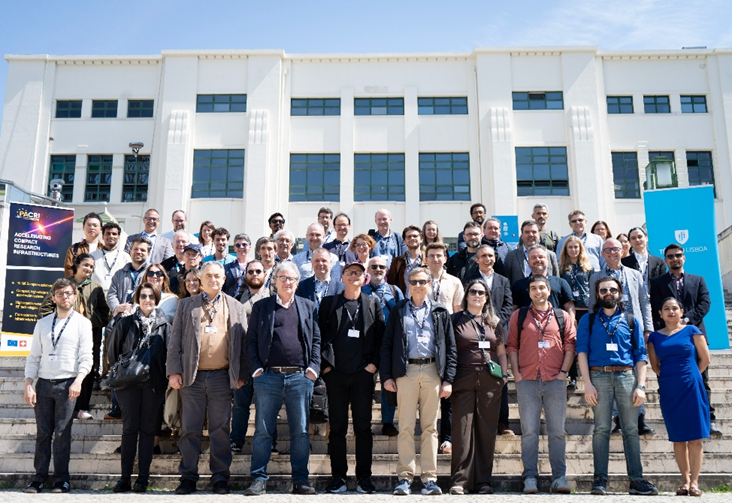
The Lisbon annual meeting brought together all partners, both in-person and online, to present and discuss progress made in their respective tasks within the project. On the first day of the meeting, Prof. Jorge Vieira welcomed all participants, including WP leaders and early career researchers from institutions across Europe. PACRI Coordinator Dr. Gerardo D’Auria then outlined the meeting agenda for the three-day program before Dr. Alessandro Zardini, the newly appointed PACRI Project Officer from the Research Executive Agency (REA), introduced himself and discussed the project’s strategic importance for Europe, underlining central project aims, and explaining how REA can support the project.
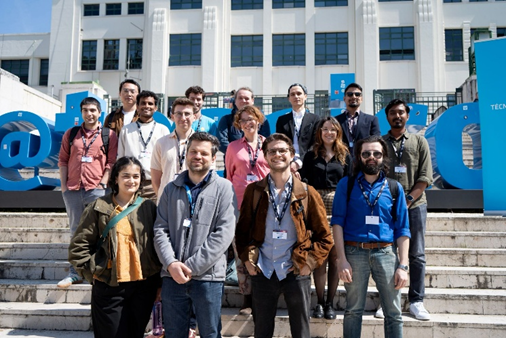
The technical sessions then featured WP leader presentations on progress updates covering dissemination and communication activities, theory and simulations, plasma structures, diagnostics and instrumentation, RF technology, and laser technology. These were followed by engaging discussions that identified opportunities for collaboration across work packages and clarified the next steps in coming months. Prof. Carsten P Welsch, Head of the QUASAR Group and PACRI WP2 Scientific and Industrial Exploitation Lead, presented an update outlining progress in dissemination and communication, as well as the evolving scientific and industrial exploitation strategy.
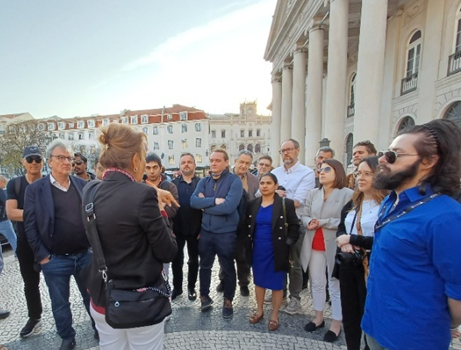
At the end of the second day, a guided walking tour through Lisbon’s charming historic districts complemented the diverse program. Participants enjoyed discovering the city’s architectural treasures and cultural landmarks before gathering for the consortium dinner.
Prof Welsch said: “It was great to see the activities across the various work packages produce first results, and how much collaboration was happening across PACRI.”
The final day began with the PACRI General Assembly, covering governance and strategic planning. As part of that, CI expert Dr. Debdeep Ghosal from the QUASAR Group had the opportunity to lead a discussion and presented on collaboration platforms and institutional constraints, initiating a consortium-wide exchange aimed at identifying a common software solution.
Looking ahead, the next annual meeting was scheduled for mid-February 2027, strategically timed to facilitate completion of the first periodic report. The group also discussed upcoming events such as a plasma accelerator showcase event in Brussels (23rd April, 2026), an Innovation for a Sustainable Tomorrow Symposium in Liverpool (10th July, 2026), and the EuPRAXIA annual meeting, conference on Elba in 21st – 25th September 2026. Finally, Dr. Lukas Gruber delivered feedback from the Scientific Advisory Committee, praising the substantial progress made by work package teams while emphasizing the importance of developing a holistic sustainability strategy for key technologies beyond the project’s duration. Dr Toby Overton, a