
The University of Liverpool’s QUASAR Group, based at the Cockcroft Institute, is delighted to celebrate the successful completion of three doctoral theses by Ondrej Sedlacek, Oliver Stringer and Catherine Swain. Their work spans cutting-edge accelerator diagnostics, contributing to major international facilities including CERN’s Large Hadron Collider (LHC) and AWAKE experiment.
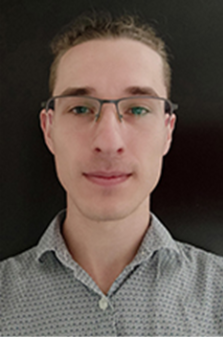
Ondrej Sedlacek’s thesis, “Beam induced fluorescence monitor for high intensity beams”, focuses on the development of a next-generation Gas Jet Monitor (Beam Gas Curtain) for high-intensity accelerators. His work demonstrates a minimally invasive diagnostic capable of continuous transverse beam profile and emittance measurements under very demanding conditions. The system was successfully installed and commissioned at CERN and deployed at the LHC, where it now provides high-precision measurements for both proton and heavy-ion beams. This represents a significant step forward in accelerator diagnostics, addressing long-standing challenges in measuring high-intensity beams without disrupting operation. It allowed, for the first time, to characterize the LHC beams over the entire energy spectrum.
Ondrej was examined by our very own Prof Tim Greenshaw (University of Liverpool) and Prof Ismael Martel (University of Huelva). He was supervised by Prof Carsten P Welsch, Dr Hao Zhang and the late Dr Stefano Mazzino (CERN).
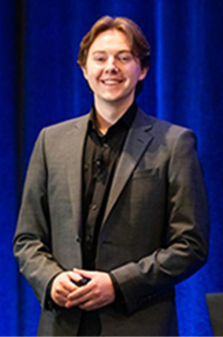
Oliver Stringer’s thesis, “Developments of a Supersonic Gas Jet Beam Profile Monitor for the High Luminosity LHC”, presents major advances in gas jet-based diagnostics. His work develops a novel supersonic gas jet system capable of producing high-resolution, two-dimensional beam profile measurements through beam–gas fluorescence.
A key achievement of this research is the optimization of gas jet geometry using advanced simulation and genetic algorithms, enabling enhanced signal strength while preserving ultra-high vacuum conditions. Oliver presented his results to the international community through a very nice, invited talk at IPAC’24 in Nashville, USA.
Oliver was examined by Prof Andy Boston (University of Liverpool) and Dr Kiel Hock (Brookhaven National Laboratory). He was supervised by Prof Carsten P Welsch and Dr Hao Zhang.

Catherine Swain’s thesis, “Novel imaging diagnostic methods for AWAKE Run 2c”, addresses the challenges of diagnostics in emerging accelerator technologies. Her work focuses on developing innovative techniques for measuring beam properties in plasma wakefield acceleration experiments.
Catherine introduced new approaches to emittance measurement using optical transition radiation, enabling high-resolution, minimally invasive diagnostics. In addition, she developed a longitudinal bunch length monitor based on coherent synchrotron radiation (CSR), with simulations demonstrating its feasibility for future experimental deployment. These developments are particularly relevant for the AWAKE experiment at CERN, but applicable to a much wider range of accelerators and beams.
Catherine was examined by our very own Prof Chris Lucas (University of Liverpool) and Prof Alessandro Cianchi (University of Rome Tor Vergata). She was supervised by Prof Carsten P Welsch and Dr Joseph Wolfenden.
Congrats!