
As one of the founding members of CERN, the UK has a long history of contributing to its physics and engineering projects. In recognition of recent successes in UK-CERN accelerator science and engineering, the community came together on 26 November 2025 for the UK-CERN accelerator celebration day. Over 100 attendees joined either in-person at the Cockcroft Institute, based at Daresbury Laboratory, CERN building 4, or online, to mark the occasion.
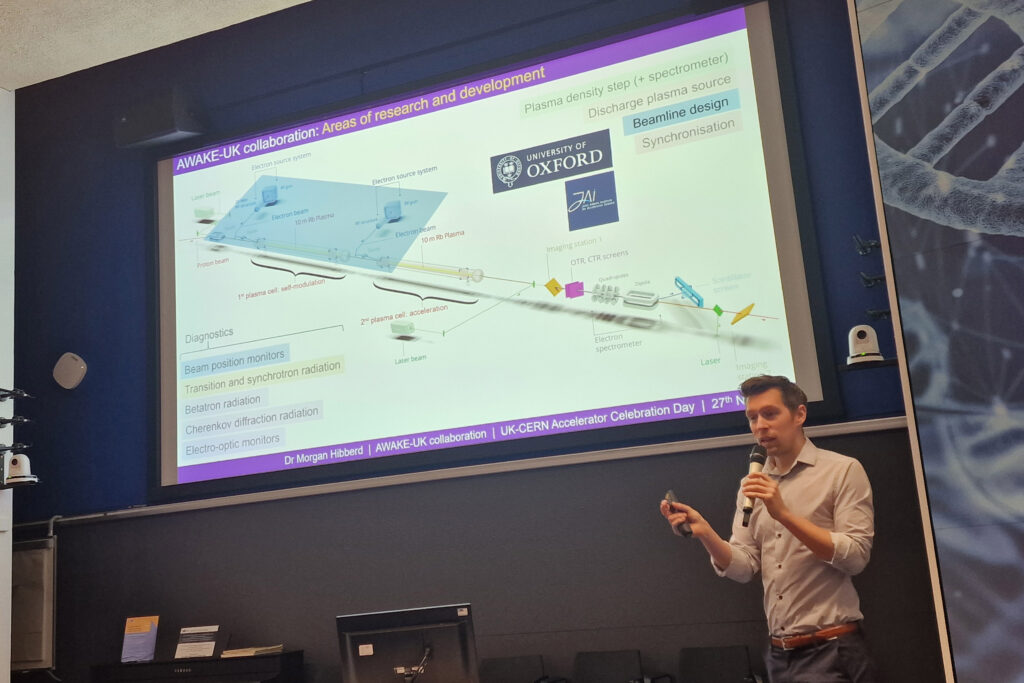
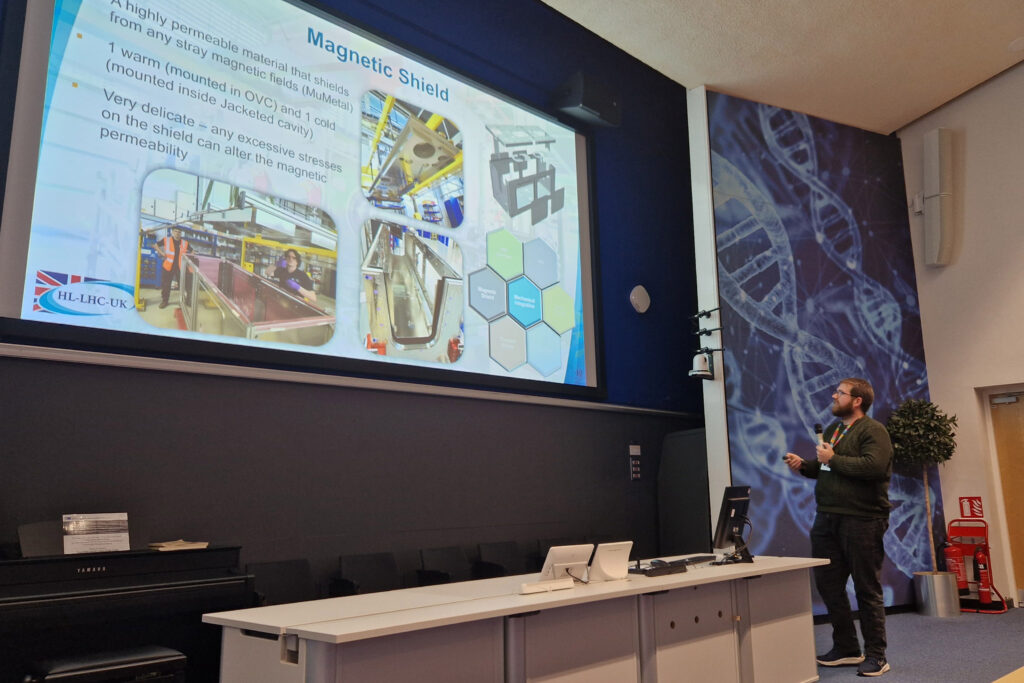
The event featured a range of talks, celebrating various aspects of the UK-CERN connection. On the topic of accelerator physics, resonance driving terms in the LHC and beam-driven plasma acceleration as part of the AWAKE experiment, were presented by members of CERN, the John Adams Institute and the Cockcroft Institute. A major engineering milestone was also highlighted: the production of crab cavity cryomodules at Daresbury Laboratory and their shipment to CERN to be installed as part of the High Luminosity upgrade of the LHC (HL-LHC).
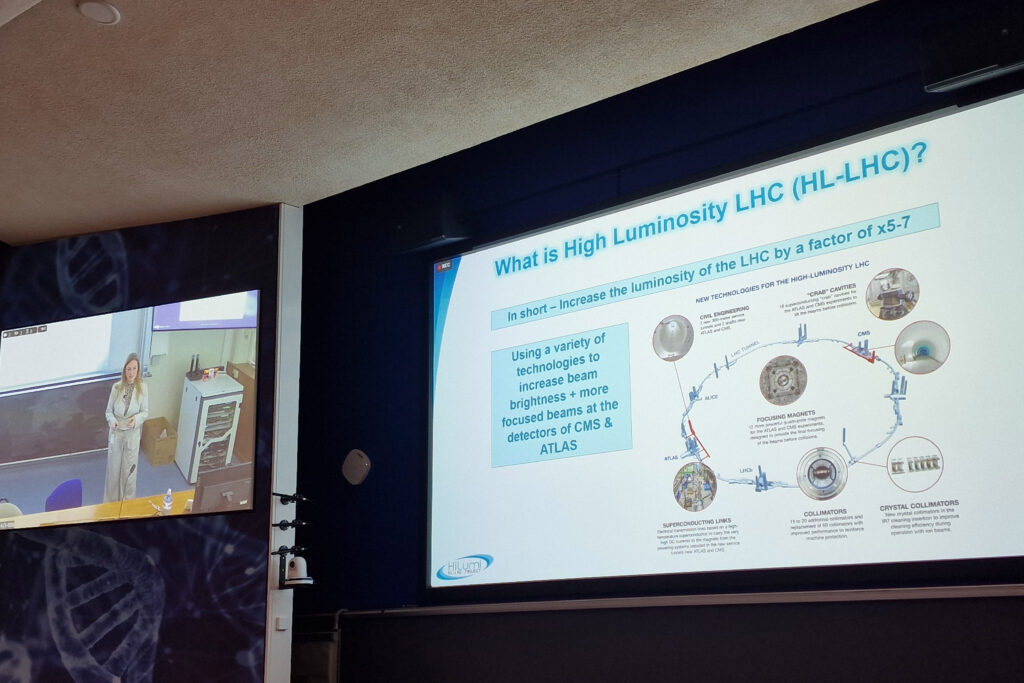
The programme also showcased advances in detector systems. Cockcroft Institute expert Carsten P Welsch presented a beam position monitor, developed over several years by the University of Liverpool’s QUASAR Group, which was recently installed for the HL-LHC and is now being considered as baseline for the project. Xavi Cudie from CERN presented the Medipix and Timepix pixel detectors, demonstrating their application to CERN physics experiments and beyond in medicine, industry, and education.
In addition to the project talks, participants also heard about ways they can get involved with CERN. Richard Farrow presented the UK Strategy for CERN and how we can support the UK-CERN connection through procurement, collaboration and knowledge transfer. Haroon Rafique introduced EFCA (European Committee for Future Accelerators) and gave candid advice on some of the ways UK scientists and engineers can land a job at CERN.

This event was made possible thanks to sponsorship from the Institute of Physics (IOP) Particle Accelerators and Beams (PAB) group and the Institution of Engineering and Technology (IET) Particle Accelerator Engineering Network (PAEN). The organisers Kay Dewhurst (IOP PAB), Dan Turner (IOP PAB), and Sam Pitman (IET PEAN) thank everyone at Daresbury and CERN who helped to make the event a success.