
Latest News on the LHC at CERN »»CERN public web»»
10 May 2012
CERN Technical Students programme
Loren Wright a 3rd Year Mechanical Engineering student at Lancaster University has been accepted on the CERN Technical Students programme. CERN is the European particle and nuclear physics located in Geneva Switzerland and is home to the giant Large Hadron Collider (LHC) and student placements are highly prestigious and sought after.
25 April 2012
Graduate Vacancies
Announcing two graduate vacancies. These are permanent positions, with the successful candidates developing their expertise to an advanced level.
Laser Scientist
…more
information »
RF engineer
…more
information »
23 April 2012
From cancer therapy to security: using the UK's accelerator technology expertise to accelerate business
More than thirty representatives of innovative high-tech companies from
across the UK met at the Daresbury Science and Innovation Campus (DSIC)
on 17 April 2012, to find out how the country’s leading designers,
developers and builders of particle accelerators could be beneficial to
their own businesses.
…read
more »
20 April 2012
Compact Particle Accelerators
The Cockcroft Institute recently hosted a half day meeting on compact particle accelerators. The meeting, sponsored by the Institute of Physics Particle and Beams Group, focussed on compact medium energy particle accelerators and covered electrostatic, RF and laser based accelerator concepts. The meeting had a good mix of many accelerator physicist and engineers from all over the UK and around 40 people attended the meeting. Speakers from the Cockcroft, Belfast, Rutherford Appleton Laboratory, Huddersfield, Strathclyde, CERN and Siemens gave several interesting talks on the state of the art in compact accelerators. The meeting was split into two sections, one focussing on "conventional" electrostatic and RF based accelerators and the other on "exotic" millimeter wave and laser based accelerators.
The "conventional" session was anything but, with talks on compact linacs, cyclotrons and FFAG's as well as some very novel compact accelerator concepts from Siemens. An concluded with a lively discussion led by Mike Poole on limitations and other opportunities for compact accelerators.
The exotic session lived up to its name with talks on metamaterials, photonics, pseudospark sources, laser wakefield acceleration and proton acceleration through shining a laser on a target.
18 April 2012
DITANET SYMPOSIUM
Quantum Systems and Research(ers) at Accelerators
Cockcroft Institute, UK - May 16th 2012 (p.m.)
On the afternoon of Wednesday16th May 2012 the CI will host a Symposium presenting some of the highlights in antimatter research and beam instrumentation R&D. It will provide an overview of the present challenges and opportunities in researcher training at all career stages.
In addition to the keynote talks, each participant will be given the opportunity to present their research work in form of a poster contribution.
This event is free of charge although advance registration is required
Registration deadline: 30th April 2012
Registration and further details
30 March 2012
Postgraduate opportunities in accelerator and laser research
The University of Liverpool is currently recruiting Early Stage Researchers for two large Marie Curie Initial Training Networks (ITN) based around accelerators. These networks will provide a broad international training program consisting of international schools, topical workshops and conferences. PhD registration and excellent salaries will be offered. Vacancies exist at organisations across Europe. Five of the positions are with the University of Liverpool and will be based at the Cockcroft Institute. The projects are LA3NET and oPAC:
…read more»
27 March 2012
The Big Bang 2012
Earlier this month, the National Exhibition Centre at Birmingham played host to the 'Big Bang', the UK's largest science, engineering and technology fair. Over three days, nearly 55,000 people attended the event, making this the most significant outreach opportunity of the year.
…read more»
Ground-breaking research at the Cockcroft Institute on ‘Anti-matter’ and Acceleration in Novel FFAG and Compact Linear Accelerators
12 March 2012
Ground-breaking research at the Cockcroft Institute on anti-matter
Resonant Quantum Transitions in Trapped Antihydrogen Atoms
The research presented in this paper is the first direct measurement of internal atomic energy levels of a bound anti-matter atom performed by the ALPHA collaboration at CERN. This is a milestone measurement on the path to making precise comparisons between matter and antimatter in an effort to understand why the universe is predominantly made of matter. Dr. Will Bertsche, who recently joined the Cockcroft Institute Faculty at the University of Manchester, is a major collaborator on this experiment.
The measurement comes hot on the tail of the first demonstration of trapping of ground-state antihydrogen by the ALPHA collaboration. It is, in a sense, a proof-of-principle experiment that pushes the technical limits of the original ALPHA apparatus. The ALPHA Collaboration is designing and building a new apparatus that will enable the next generation of precision measurements. The Cockcroft Institute plays a key role in this effort, and is actively designing and manufacturing the Antiproton Catching Trap – the critical link between the CERN accelerator complex and the ALPHA Anti-atom Trap.
http://www.nature.com/nature/journal/vaop/ncurrent/full/nature10942.html
12 March 2012
world’s first demonstration of fast FFAG Acceleration
In a first-of-a-kind experiment - published this week as the cover article in Nature Physics - researchers from an international collaboration including scientists and engineers from the Cockcroft Institute and Daresbury Laboratory and many other UK and international laboratories, have demonstrated the feasibility of a new type of particle accelerator, the results of which could revolutionise rapid acceleration of unstable charged particles(e.g. Muons) in future accelerators, open up alternative ways to particle beam cancer treatment and provide a route to cleaner nuclear power. …read more»
14 March 2012
Compact Electron Linac reaches 610 keV
The compact linear accelerator prototype being constructed at the Daresbury Laboratory, and led by the Cockcroft Institute, as part of the STFC PNPAS programme, has managed to substantially increase the energy of the accelerated electron beam to 610 keV. The linac uses X-band RF cavities to make an industrial linac substantially smaller than those using current S-band technology to reduce the size and weight for mobile applications. The technology and skills for this project have been transferred from work at the Cockcroft Institute on “deflecting” crab cavities for linear particle colliders. …read more»
15 March 2012
Daresbury Laboratory Particle Physics Masterclass 2012
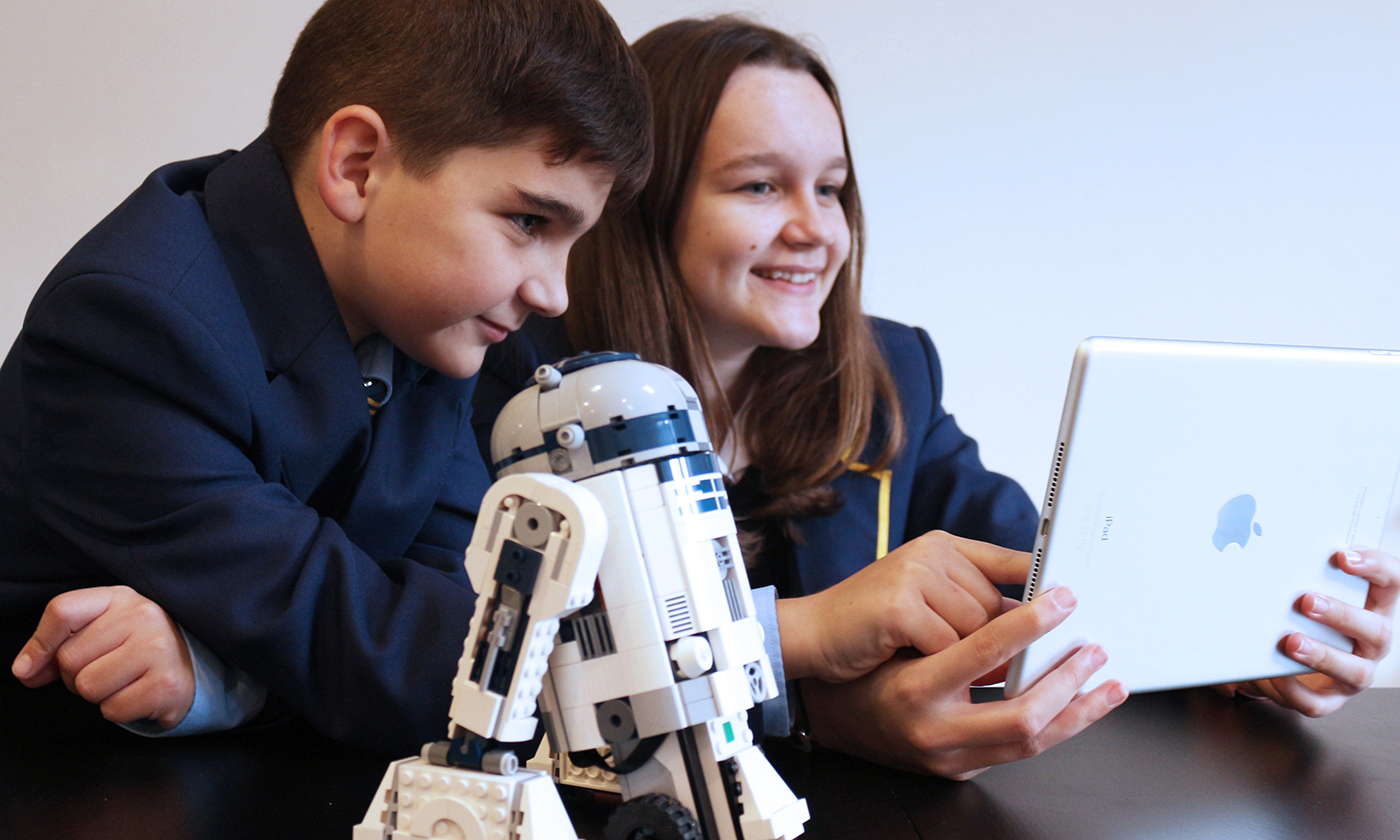
Students from schools across the North West joined scientists from the Cockcroft Institute (CI) at Daresbury Laboratory on March 15th and 16th for the annual particle physics master class. This yearly chance for schools to get experience of what happens at the laboratory is run by the STFC communications group in collaboration with the Cockcroft Institute. Building on the successes of previous years, and acknowledging the unique opportunities available in running a master class at a national laboratory, the Particle Physics Masterclass at Daresbury has more emphasis on the particle accelerators themselves. …read more»
29 January 2012
Alice Photon Science meeting
An afternoon of talks on the photon science programmes on Alice was held at Daresbury on 23 January. Highlights included the search for a cancer diagnostic using sub-diffraction infrared imaging, and novel techniques for high magnetic field research. A lively discussion followed in which it was clear that the accelerator provides a valuable resource in the UK to address key Grand Challenges.
A_Cricenti_Alice_SNOM.pdf AlicePhotonScienceProgramme.pdf
D_Graham_Manchester_research.pdf D_Holland_Fewphoton.pdf
J_Clarke_Alice_post_MARCH_2013.pdf M_Surman_Alice.pdf
N_Thompson_Clara.pdf P_Weightman_Future_Funding_Alice.pdf
P_Weightman_Liverpool_research.pdf Y_Saveliev_ALICE_status.pdf
21 December 2011
Inspiring the scientists& engineers of the future
The Big Bang UK Young Scientists & Engineers Fair.
The NEC, Birmingham. 15 - 17 March 2012
The biggest single event of its kind in the country, The Big Bang Fair
moves to Birmingham for 2012. An award-winning combination of exciting
theatre shows, interactive workshops and exhibits delivered by
household names, together with careers information provided by a wide
range of people already working in the field, The Big Bang Fair
enables young people to see science and engineering in a new light. …read more»
Medical Isotopes:
accelerator-based solutions to meet Europe’s future needs
The Cockcroft Institute recently co-hosted, in conjunction with CERN,
a workshop on the “Accelerator-driven Production of Medical Isotopes” on
the 8th and 9th of December 2011. This unique event brought together some
60 attendees including world–leading scientists and engineers, specialist
clinicians and key global technology suppliers in an open forum to discuss
some of the challenges faced in meeting Europe’s future isotope supply
needs. …read more»
6 M€ EU Project on Accelerator R&D will be coordinated by
the Cockcroft
Institute / University of Liverpool
Within the oPAC project all these aspects will be closely linked with the aim to optimize the performance of present and future accelerators that lie at the heart of many research infrastructures. The project brings together 22 institutions from around the world, including major research centres. …read more »
Symposium in celebration of five years of the Cockcroft Institute.
http://www.cockcroft.ac.uk/events/amazing_particles/
Daresbury's Cockcroft physicist scoops award for inspirational women
Cherry Canovan, a Lancaster University PhD student of mathematical physics at the Cockcroft Institute, has been recognised for her significant achievement in managing a successful career change into science whilst having a young family....read more »
First scanning of near field optical images of oesophageal cancer using the InfraRed Free Electron Laser (IRFEL)
A research collaboration between the Cockcroft Institute (including its stake holding partners: University of Liverpool Physics department and STFC Daresbury Laboratory’s ASTeC department), the Royal Liverpool and Broadgreen University Hospitals NHS Trust, the National Research Council ISM of Rome Tor Vergata and the Institute of Translational Medicine have recently collected the first scanning near field optical images of oesophageal cancer using the InfraRed Free Electron Laser (IRFEL) on the ALICE accelerator at Daresbury. ...read more »
DITANET Conference held in Seville, Spain

The DITANET Consortium held a three day international conference on diagnostic techniques for particle accelerators and beam instrumentation in Seville, Spain between 9th and 11th November 2011 ...read more »
£4M EU Project on Laser R&D will be coordinated
by the Cockcroft Institute / University of Liverpool
17 October 2011
The advancement of science and engineering in the past decades is inherently linked to the development of lasers. ...read more »
Postgraduate Conference
6 October 2011
The Cockcroft Institute held its first Postgraduate Conference on the 5th October. Several presentations were given by PhD students from each of the universities on a wide range of topics from advanced electromagnetic theory, simulations of the LHC and other accelerators, and designs of novel types of beam diagnostics. This gave the students the chance to find out about each others work and to present their own work to their peers. ...read more »
Welcome
The Cockcroft Institute is an international centre for Accelerator Science and Technology (AST) in the UK. It was proposed in September 2003 and officially opened by the UK Minister for Science, Lord Sainsbury, in September 2006. It is a joint venture between the Universities of Lancaster, Liverpool and Manchester, the Science and Technology Facilities Council (STFC at the Daresbury and Rutherford Appleton Laboratories) and the North West Development Agency (NWDA). The Institute is located in a purpose-built building on the Daresbury Science and Innovation Campus adjacent to the Daresbury Laboratory and the Daresbury Innovation Centre, and has established satellite centres in each of the participating universities.
The Institute provides the intellectual focus, educational infrastructure and the essential scientific and technological facilities for accelerator science and technology research and development, which will enable UK scientists and engineers to take a major role in innovating future tools for scientific discoveries and in the conception, design, construction and use of the world’s leading research accelerators for the foreseeable future.
The Institute is named after the Nobel prizewinner Sir John Cockcroft FRS . Born in Todmorden in north west England, and educated in part in Manchester, he is regarded as the pioneer of modern accelerator research.
Cockcroft’s subatomic legacy: splitting the atom (pdf)
This article first appeared in CERN Courier December 2007, and is reprinted with permission.
Amazing particles and light (CERN Courier March 2007)
Accelerators for nano- and biosciences (CERN Courier Oct 2002)


![amazing_header[1].jpg](images/amazing_header[1].jpg)